
Remember every doctor: what they said last time, when they see reps, what you left
Industry surveys put the share of physicians who will see a rep at all at barely a third, and the average detail at under two minutes. In that world, the rep who remembers the last conversation is the one who gets the next one. Memory is not a personality trait. It is a record you either keep or do not.
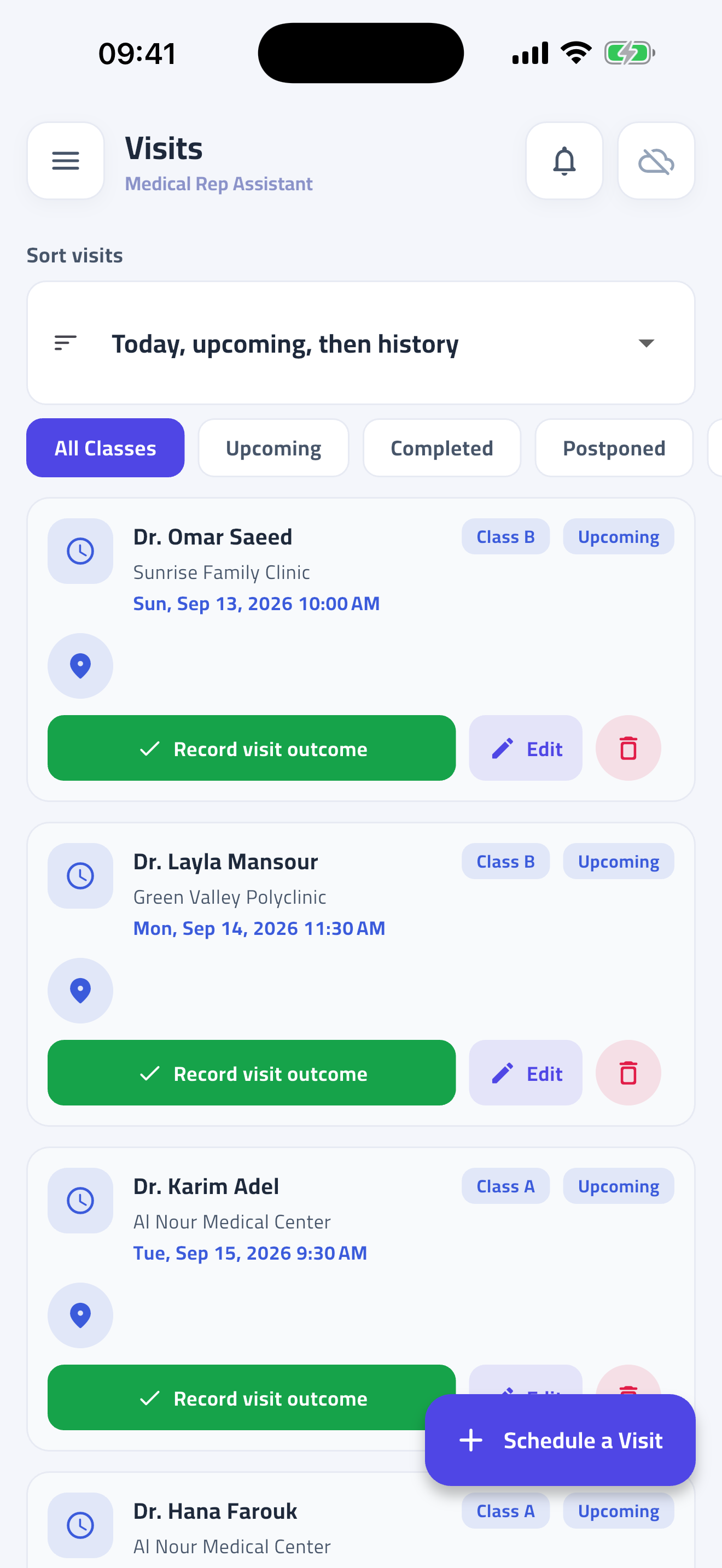
What a doctor notices in the first ten seconds
Doctors see several reps a week and most of them open the same way. "How is it going with the product?" tells the doctor you do not remember what they said about it last month. "You mentioned the dosing question with elderly patients — I brought the data" tells them you listened, you followed up, and this visit will be short and useful. The second rep gets the two minutes. The first one gets the receptionist.
The difference is not charm. It is that the second rep wrote one sentence down after the last visit and read it in the car before this one.
Four things to keep per doctor
What they said last time. One or two sentences, in their words, written within minutes of leaving. Not "positive" or "objection" — the actual thing: "prefers the sachet for children", "asked about interactions with metformin", "wants to see the local trial". This is the sentence you read before the next visit.
When they actually see reps. The days and the hours. This is also what stops you burning a visit on a Wednesday at a Monday-only doctor, and what lets you say "I will be back Monday around eleven" and mean it.
What you left. Samples by product and count, per visit. Partly for the company's accounting, mostly because "you left six of the 20 mg last time, did those go?" is a better opener than another handful of samples.
Who they are, in a line. Specialty, the clinic, a phone or WhatsApp number that works, and anything personal that matters — the day they operate, the assistant who decides whether you get in, the fact that they moved clinics in March.
Make the history one thread, not two
Reps who keep notes tend to keep them in two places: a notebook per day (what happened on Tuesday) and a list per doctor (who Dr. Ahmed is). The two never meet, so on Tuesday evening you can say what you did and on the next visit you cannot say what you learned. Keep it as one thread instead: every visit is written on the doctor, dated, so opening the doctor shows the visits in order, and opening the day shows the doctors. Same facts, both directions.
This is also how the history survives a territory change. A day-by-day notebook is useless to the next rep; a doctor-by-doctor history with dated visits is the most valuable thing you can hand over — or take with you.
No-see doctors: keep the record anyway
Some doctors will not see you. Record them anyway, with a monthly visit count of zero and a note that says what does work: "receptionist takes samples Thursdays", "sees reps only at the hospital, not the clinic", "will read a one-page summary if left with the assistant". A no-see doctor with a zero count drops out of your weekly plan, stops costing you a slot, and stays in your list for the day the receptionist says "actually, he has ten minutes".
Turn the record into the next visit
The record is only useful if it is read at the right moment, and the right moment is the five minutes before the door. Two habits close the loop. First, before each visit, open the doctor and read the last feedback line — that is the opener. Second, set yourself a nudge ahead of each planned visit so the reading actually happens instead of being remembered in the waiting room. The doctor's window tells you when to be there; the last sentence tells you what to say; the samples line tells you what to ask about. That is the whole visit, prepared in the car park. The window and the count are also what a weekly plan is built from.
A rep who keeps this up for a quarter stops "remembering" doctors and starts knowing them. The doctors notice.
Questions reps ask
How much should I write after a visit?
One sentence of what the doctor said, plus the status and what you left. If you write more than three lines you will stop doing it by week two. The sentence is what matters; the rest is a count.
I have two hundred doctors. Do I really keep notes on all of them?
Keep the window and the count on all of them, because those drive the plan. Keep the sentence on the ones you actually visit — which, with a real monthly count, is far fewer than two hundred. The no-see ones get a note about what does work and nothing more.
What about the doctor's personal details — birthday, children, football team?
If it helps the relationship and you would be comfortable with the doctor reading it, put it in the notes. If you would not be comfortable, do not write it. The record is yours, but that is a good test anyway.
How RepVisit Pro helps
Every doctor in RepVisit Pro carries their own history: each visit with its status and the feedback you wrote, the preferred days and time window, a notes field, and their class and monthly visit count — all on your phone. From a visit you can call or message the doctor and hand the clinic to your maps app, In-app visit reminders nudge you before each visit, the samples and sale lines are recorded inside the visit, and the day can be re-sorted by time and distance.
Read the guide for this feature