
The daily call report without the night shift
Ask reps what they resent most and it is rarely the driving or the waiting rooms. It is the second shift: the hour at night when the day's visits get written up for the company. The visits already happened. Writing them twice is the part that costs the evening.
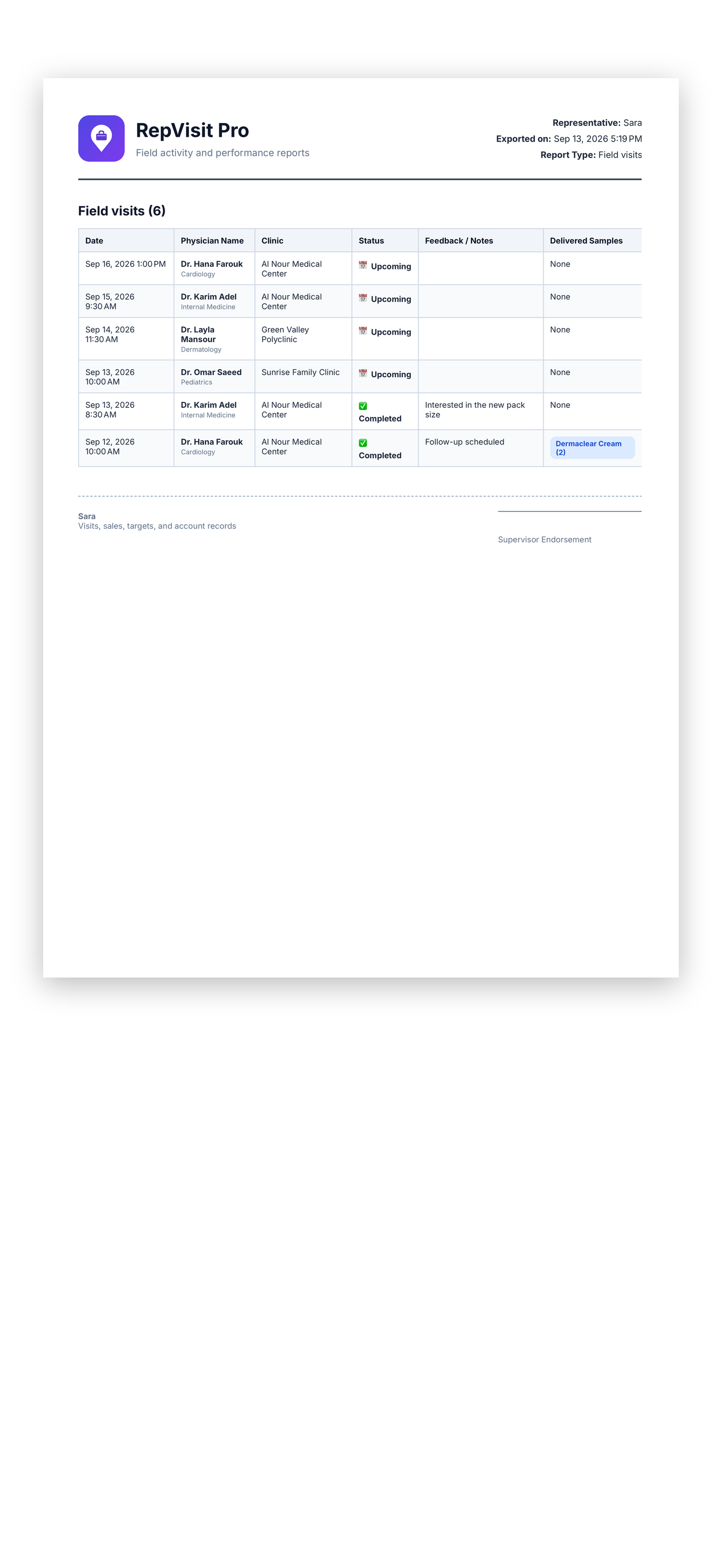
What the daily call report actually asks for
Formats differ by company and country — a DCR in India, a "daily report" in Egypt, a call entry in a CRM in the Gulf — but the fields are the same everywhere. Which doctor, at which clinic, at what time. Whether the visit happened or was postponed. What was discussed, in a sentence. Which products were detailed. Which samples were left, and how many. Any order or commitment. Sometimes the pharmacy call that followed, and the day's expenses.
None of that is hard. What makes it a night-shift job is that by the time it is written, it is reconstructed. Twelve visits, six hours ago, in traffic since — the sentence about what Dr. Hala said gets shorter and vaguer, the sample count becomes a guess, and the visit that was actually postponed gets written as done because that is what the plan said.
Why writing it at night produces worse reports, not just later ones
Reps on public forums are blunt about where this leads: reports "that mean absolutely nothing", the number of calls written to match the number expected, and the compliance trouble that follows when the two are checked against each other. The report is not wrong because the rep is careless. It is wrong because memory is the source, and memory at 9 pm is a poor source for a day that started at 8 am.
The fix is not to write faster at night. It is to move the writing to the moment the information exists.
Capture the visit once, in the car park
The rule is one line: a visit is closed before the next one starts. A moment in the car, before you drive, while the conversation is still in your ears. Status — done, postponed, cancelled. The doctor's feedback, in the words they used, one or two sentences. The samples you left, product and count. Any quantity sold or promised, with the price if you sell directly.
That is the whole daily report, captured while it is still true. The night version becomes copying, not composing. If the company's system needs it typed in, you type from a record you trust. If the company accepts a printed or emailed summary, you already have one.
Let the monthly reports fall out of the daily record
The trap in most reporting is that daily and monthly are separate jobs. The daily report goes to the manager and disappears; at month end, the rep rebuilds the month from memory and a pile of daily sheets. Every number is entered twice, and the two copies never quite agree.
If the daily record is kept as structured lines — this doctor, this product, this quantity, this date — then every monthly report is a filter on it. Field visits for a date range. Samples given, by product, with the total. Sales and returns with totals per clinic. Target progress per product for the month. Nothing is re-entered; the month is just the days added up. The rep who keeps this record walks into the cycle meeting with the printouts; the rep who does not spends the last evening of the month rebuilding them. Target progress in particular is covered in Hitting the monthly target.
What this record is, and what it is not
It is worth being precise. A personal field record is your copy of what happened: the evidence you keep for yourself, the source you copy into the company's form, the history you carry when you change company or territory. It is your own record, not your company's reporting system. It does not submit anything on your behalf, it does not replace the CRM or the sheet your manager asks for, and it does not show the manager anything unless you print or send it. That separation is the point: the company's system exists for the company; this record exists for you.
Work this way for a month and two things change. The night shift shrinks to the time it takes to copy into the company's format. And the report gets more honest, because a visit written at 11:40 in the car park says what actually happened at 11:30.
Questions reps ask
My company has its own CRM. Why keep a second record?
Because the company's record belongs to the company and is written for the company's questions. Your record is written for yours — what did this doctor say last time, how many samples has this clinic had this quarter, what did I actually sell in week two. It also comes with you when the job changes; the CRM does not.
What if I do not have time to close a visit before the next one?
Close the status at minimum — done, postponed, cancelled — and the one sentence of feedback. Samples and quantities can wait until the next gap. The status and the sentence are the two things memory loses first.
Does a printed report from a personal record count with a manager?
That is between you and your manager, but a dated A4 table of visits with doctor, clinic, status and feedback is usually more than they were getting. Most managers care that the visits happened and what was said; the format matters less than the consistency.
How do I keep expenses in the same record?
Add the day's fuel, parking and meals as you pay them, with the date. At month end they become a list for the expense claim instead of a shoebox of receipts. The habit is the same as closing a visit: record it when it happens.
How RepVisit Pro helps
In RepVisit Pro the visit is the record. Mark a visit completed, write the doctor's feedback, and add the samples you left and any priced sale lines in the same form; they flow into Samples, Sales and Debts & Payments without retyping. Reports turns that record into ten A4 documents — field visits, weekly plan, target progress, sales and returns, samples, clinic statements and more — printed or saved as PDF from the phone, or attached to an email where the phone allows it. It is your own record, not your company's reporting system: you still submit whatever format your company requires, but you copy from a record you trust instead of from memory.
Read the guide for this feature